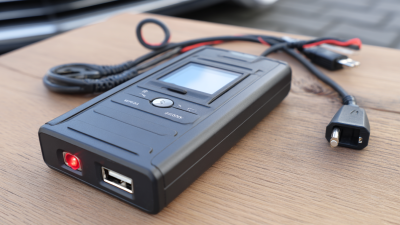
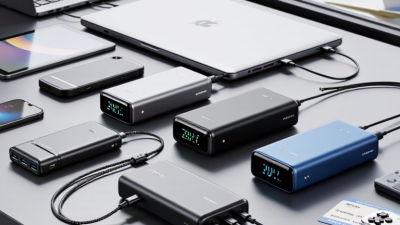
A dead battery rarely waits for a convenient moment. It can leave you outside a supermarket, beside a quiet road, or in a cold driveway. A dependable Mobile Car Battery Charger may restore confidence when help is not nearby. However, choosing the right model requires more than reading a bright product label.
This guide examines popular portable chargers through practical, everyday criteria. I consider starting power, battery capacity, charging speed, cable quality, size, and display clarity. I also check safety features, including reverse-polarity protection and automatic shutoff. These details matter when your hands are cold and visibility is poor. A jump starter that looks powerful may still disappoint with an older diesel engine. That lesson is easy to miss.
Real use tells a different story.
The comparison also considers independent specifications and manufacturer instructions. Product claims can sound impressive, but measured performance deserves greater trust. I look for clear compatibility information, realistic charging times, and dependable customer support. Weather, vehicle size, battery condition, and maintenance history can change the result. No single charger wins every situation.
Some conclusions remain uncertain.
This overview aims to identify the strongest choices for commuting, road trips, emergency storage, and occasional home use. It will explain where each charger performs well and where its weaknesses appear. I will not pretend that every test is perfect. Portable power products evolve quickly, and user experience can vary. Still, careful comparisons can help you choose a safer, more practical charger for your vehicle.
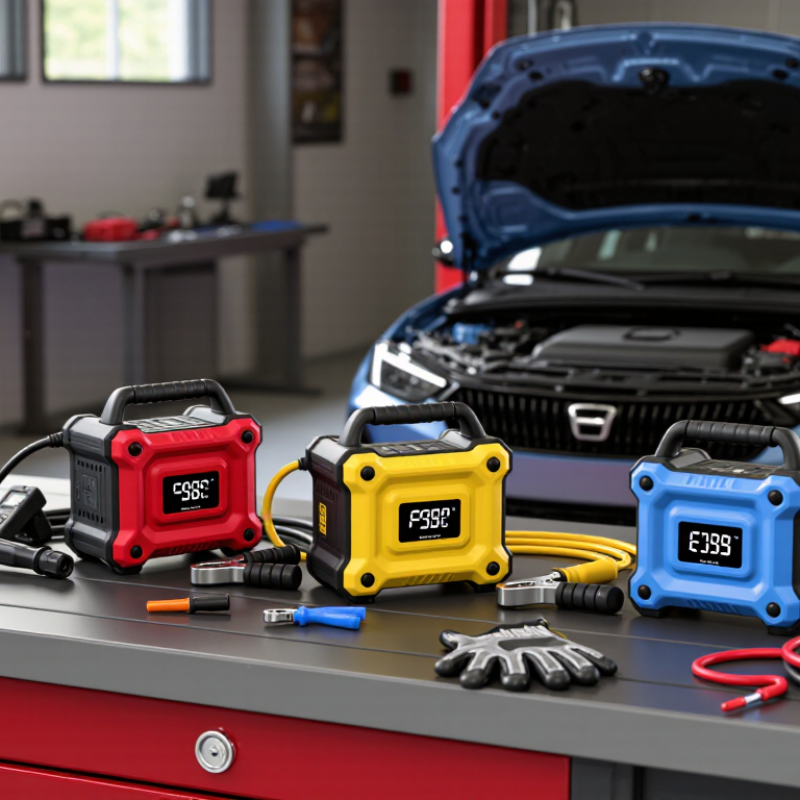
A mobile car battery charger is a portable device that restores energy to a weak 12-volt vehicle battery. Unlike jumper cables, it does not depend on another car. Most units contain a rechargeable battery, charging circuits, and clamps or a charging lead. When connected correctly, the charger sends controlled current into the battery. The vehicle may start after a short boost, but a deeply discharged battery often needs longer charging.
The process is simple, but the details matter. Turn off the engine and accessories, then inspect the battery for cracks, leaks, or heavy corrosion. Connect red to positive and black to negative, unless the vehicle manual specifies another safe grounding point. Many modern chargers check voltage before delivering power. This reduces reverse-polarity risks, though no protection system replaces careful handling. Keep the device dry and place it on a stable surface.
In practical use, output rating affects performance. A unit with adequate peak current can start a small engine, while larger engines may require more capacity. Charging speed also depends on temperature, battery age, and cable quality. I have found that rushing a cold battery creates false confidence; the engine may crank once, then stop. Read the instructions, monitor heat, and recharge the device after use. A charger cannot repair damaged cells, and that limitation is easy to overlook.

Estimated time to restore 30 Ah to a typical 12 V automotive battery
A mobile car battery charger supplies controlled direct current to the battery, gradually replacing the electrical charge removed during starting or vehicle use. Higher-current chargers restore energy faster, while lower-current chargers are generally better suited to slow maintenance charging.
Estimates assume a 12 V battery, 30 Ah of charge to be restored, and approximately 20% charging losses. Actual time varies with battery condition, temperature, charging mode, and the charger's current limit.
A dependable mobile car battery charger is judged by control, not peak amperage. ADAC’s 2024 Pannenstatistik reported that 43.2% of roadside failures involved the starter battery. That figure makes charger safety more than a convenience. Choose a unit with automatic current regulation, reverse-polarity protection, short-circuit detection, and thermal shutdown. A clear charge indicator also matters beside a dark roadside. Small screens can be difficult to read.
Output compatibility deserves careful attention. A charger for a small petrol car may not suit a large diesel battery. Check the battery’s voltage, capacity, and chemistry before connecting it. Lead-acid, AGM, and lithium batteries require different charging profiles. The charger should state its supported types clearly. Standards such as IEC 60335-2-29 address safety requirements for household and similar battery chargers, but compliance does not remove user responsibility. Inspect cables for cracked insulation. Keep clamps clean and dry. Never rely on a vague “universal” label.
Portability introduces compromises. A compact unit may provide less sustained current, while a powerful model can become heavy and hot. IP-rated housing helps against dust and splashes, though it is not waterproof by default. Battery capacity claims also need caution; testing conditions vary. A charger that starts quickly is useful, but gentle, monitored charging may protect battery life better. My own selection rule is imperfect: I value protection systems over the largest number printed on the box. Safety data is rarely exciting, yet it prevents expensive mistakes.
Top Mobile Car Battery Chargers: Which One Is Best?
Main Types of Mobile Car Battery Chargers Compared
Portable car battery chargers usually fall into three groups: jump starters, maintenance chargers, and solar chargers. Each type solves a different problem. A jump starter stores power in an internal battery and delivers a strong burst to start a vehicle. It is useful beside a quiet roadside, especially when the dashboard lights fade but the engine will not turn.
A maintenance charger works more slowly. It connects to household power and feeds the battery a controlled current. This type suits vehicles parked for weeks, such as seasonal cars or older cars with frequent battery drain. Many models include automatic shutoff, but users should still check cable condition and battery compatibility. Small mistakes matter.
Solar chargers use sunlight to provide a low charging current. They can help offset standby drain in outdoor parking areas. However, cloudy weather, shaded windows, and dirty panels reduce performance. They are not a dependable replacement for a jump starter after a deeply discharged battery. I once assumed a solar panel would recover any weak battery; that expectation was too optimistic.
A practical choice depends on the situation. Choose a jump starter for emergency starting, a maintenance charger for long-term storage, and a solar charger for gentle outdoor support. Check voltage, engine size, cable length, and protection against reverse connection. Never rush the connection. A damaged battery may need professional inspection rather than repeated charging.
| Charger Type | Typical Power Source | Typical Output | Compatible Battery Types | Typical Charging or Starting Capability | Portability | Key Safety Features | Best Use | Main Limitations | Overall Practicality |
|---|---|---|---|---|---|---|---|---|---|
| Lithium-Ion Jump Starter | Internal rechargeable lithium-ion battery; charged from an AC adapter, vehicle socket, or USB-C input | Usually 12 V vehicle output; peak current commonly ranges from approximately 400 A to 2,000 A | Most 12 V lead-acid starting batteries, including flooded, AGM, and some gel batteries | Designed mainly for emergency engine starting rather than full battery charging; commonly supports several jump-start attempts when adequately charged | Excellent; compact and commonly weighs about 0.5–2.0 kg | Reverse-polarity protection, short-circuit protection, over-temperature protection, overcharge protection, and low-voltage alarms | Emergency roadside starting, commuting, travel, and storage in a vehicle | Must be kept charged; performance can decline in very cold conditions; not intended to replace a complete battery charger | ★★★★★ |
| Portable Lead-Acid Booster Pack | Built-in sealed lead-acid battery, recharged from household AC power | Usually 12 V; starting current commonly ranges from approximately 300 A to 1,200 A | 12 V flooded lead-acid, AGM, and some gel batteries | Can provide strong cranking assistance and may include a built-in air compressor or work light | Good but heavier; commonly weighs about 5–12 kg | Fuse or circuit-breaker protection, reverse-connection alarm, insulated clamps, and overload protection | Work vehicles, garages, larger cars, and users who prefer a robust booster | Heavy and bulky; the internal lead-acid battery can lose capacity if stored discharged | ★★★★☆ |
| Portable Smart Battery Charger | Household AC power; some compact models use a rechargeable internal battery | Typically 12 V with charging rates of approximately 1 A to 15 A | Lead-acid batteries such as flooded, AGM, and gel; compatibility with lithium batteries depends on the charging mode | Charges and maintains a battery through multiple stages; generally not suitable for immediate engine starting unless it has a dedicated boost function | Moderate to good; typically lighter than a booster pack but requires access to a power source | Automatic voltage detection, reverse-polarity protection, short-circuit protection, overcharge prevention, and temperature compensation on some models | Regular maintenance, seasonal storage, and recovering a moderately discharged battery | Usually cannot start a vehicle with a severely discharged battery; AC power is normally required | ★★★★★ |
| 12 V Portable Trickle Charger | Household AC power or a small rechargeable power unit | Generally about 0.75 A to 2 A | Commonly 12 V lead-acid batteries; some units support AGM batteries | Maintains battery charge slowly and helps offset normal standby losses; not designed for jump-starting | Very good; small, light, and easy to store | Basic current limiting, polarity protection, and automatic float charging on smart versions | Motorcycles, seasonal vehicles, classic cars, and long-term battery maintenance | Very slow for large or deeply discharged car batteries; normally cannot provide starting power | ★★★★☆ |
| Solar Battery Charger | Photovoltaic solar panel; may use a charge controller or portable power station | Small panels commonly provide about 5 W to 20 W, while larger portable systems can provide more | Usually 12 V lead-acid batteries; lithium compatibility requires a suitable controller and charging profile | Provides low-current maintenance charging; charging speed depends heavily on sunlight, panel angle, and weather | Good; foldable panels are easy to transport, although larger panels take more storage space | Charge controller, overcharge protection, blocking diode, and reverse-current protection on properly designed systems | Vehicles parked outdoors, remote locations, camping, and long-term maintenance | Unreliable at night or in poor weather; generally cannot jump-start an engine or quickly recharge a flat battery | ★★★☆☆ |
| Vehicle-Outlet Battery Charger | 12 V vehicle accessory outlet or a compatible portable power source | Usually low output, approximately 1 A to 5 A, depending on the unit and outlet rating | Typically 12 V lead-acid batteries; the charging profile varies by model | Can provide gradual charging while connected to a running vehicle or another suitable power source; cannot normally start a vehicle independently | Excellent; usually compact and lightweight | Input fuse, current limiting, reverse-polarity protection, and thermal protection on safer designs | Maintaining or slowly charging a battery when a suitable power outlet is available | Many vehicle outlets switch off when the ignition is off; low output makes it unsuitable for rapid charging | ★★★☆☆ |
| Battery-Powered USB-C Charger with 12 V Output | Rechargeable power bank or high-capacity portable battery | USB-C input power may range from about 30 W to 100 W; 12 V battery output requires a dedicated converter and proper charging controller | Only batteries specifically supported by the charger; lead-acid and lithium batteries require different charging profiles | Useful for powering accessories or a compatible low-current charger; direct vehicle-battery charging is limited unless the unit is specifically designed for it | Excellent; generally compact and convenient for travel | Electronic current limiting, thermal protection, short-circuit protection, and battery-management circuitry | Portable power for accessories and selected low-current charging applications | Not a universal jump starter; incorrect voltage or charging mode can damage a battery or create a safety hazard | ★★★☆☆ |
Note: Actual performance varies by model, battery condition, temperature, cable quality, and engine size. Always verify the charger voltage, battery chemistry, polarity, and current rating before use.
Choosing a mobile charger starts with your vehicle’s battery, not the charger’s advertising. The 2024 ADAC Pannenstatistik found starter-battery faults in 44.1% of reported breakdowns. That figure makes reliable emergency equipment practical, not excessive. Confirm whether your vehicle uses a 12-volt lead-acid, AGM, or lithium battery. The charger must support that chemistry. Check the manual first. A wrong setting can damage the battery.
I once treated peak amperage as the deciding number. That was a poor shortcut. For routine charging, a controlled, lower-current model is usually safer and gentler. For emergency starting, compare starting current, cable length, clamp insulation, and reverse-polarity protection. Look for safety testing against recognized charger standards, such as IEC 60335-2-29. A clear charge indicator matters beside a dark roadside. So does an IP-rated housing if rain is possible.
The U.S. Department of Energy’s vehicle guidance links charging behavior with temperature and battery condition. In cold weather, keep the unit indoors when possible. A compact charger with a built-in light, thermal protection, and sealed controls is easier to use. Battery capacity also matters; a large rating is useless if it cannot hold charge for months. Check it every few weeks. I would also avoid trusting a single dashboard reading, because a weak battery may appear charged and still fail during cranking.
A mobile car battery charger is useful when a vehicle will not start, but safe handling matters more than speed. Before connecting it, park away from traffic and switch off the ignition, lights, and accessories. Check the charger, cables, and battery case for cracks, swelling, or loose insulation. Do not use damaged equipment.
I once rushed a connection in cold weather and had to stop when the clamps slipped. That small mistake changed my routine. I now identify the positive and negative terminals carefully, then connect the clamps as directed by the charger manual. Many units require the positive clamp first and the negative clamp second, but procedures can vary. Follow the vehicle and charger instructions. Keep sparks, cigarettes, and open flames away from the battery area. Good ventilation is essential.
Charge for the recommended period. Do not leave the unit connected overnight unless it specifically supports that function. After charging, switch off the charger before removing the clamps. Remove them in the reverse order. Check the battery and vehicle response instead of assuming the job worked.
Maintenance is simple, but easy to neglect. Recharge the mobile unit after use, even if it still shows power. Wipe the clamps with a dry cloth and store everything in a cool, dry place. I still forget this occasionally. Inspect the cables every few months, especially after storage in a hot trunk. For modern vehicles, consult the owner’s manual before charging, because some electrical systems need special settings.