China has become a major sourcing base for the Universal Mobile Charger market, but supplier quality varies sharply. A polished catalog is not proof.
USB Implementers Forum President and COO Jeff Ravencraft once said, “USB Type-C is the future of USB.” That idea now shapes charger design, especially for devices using USB-C Power Delivery. However, a truly universal charger needs more than a familiar connector. It should support stable voltage negotiation, dependable cable performance, thermal protection, and clear output labeling.
This guide examines leading Chinese Universal Mobile Charger suppliers through practical purchasing criteria. These include manufacturing experience, product testing, certification documentation, customization ability, and after-sales responsiveness. Reliable suppliers should explain their chipsets, safety controls, production capacity, and quality inspection process without vague promises.
Look closely at the details.
For example, ask whether a 65W model maintains output under continuous load. Request test reports for overcurrent, overvoltage, short-circuit, and overheating protection. Inspect sample chargers for loose ports, uneven seams, excessive heat, or unclear markings. Small defects can become expensive problems in large orders.
My evaluation is not flawless. Supplier rankings can change with factory upgrades, component shortages, and export-market requirements. Some manufacturers also rely heavily on contract production, making factory verification essential. Buyers should compare samples, audit records, warranties, and communication quality before selecting a partner.
The strongest supplier is not always the cheapest. It is the one that delivers consistent performance, transparent evidence, and realistic technical support.
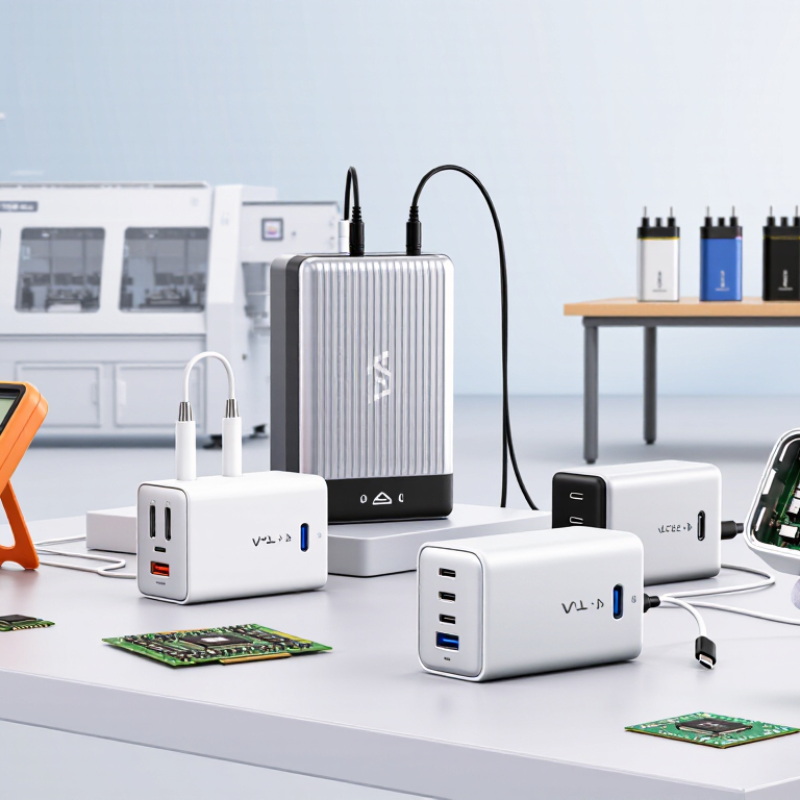
A universal mobile charger supplier is more than a factory with many plugs. It must manage USB-C Power Delivery, older charging standards, voltage variation, and heat control. IDC reported 1.23 billion smartphones shipped globally in 2024, up 6.2% year over year. That scale increases demand for compatible, dependable charging equipment. A capable Chinese supplier should provide clear wattage tables, protocol test results, production traceability, and samples from the same production line. The European Commission’s common charger rules also make USB-C compatibility increasingly important across consumer electronics.
Professional verification matters. USB-IF specifications support USB Power Delivery up to 240W, but actual performance depends on cables, components, firmware, and thermal design. Suppliers should show independent safety testing, factory quality records, and aging-test results. Certifications alone are not enough. Some suppliers still treat a printed compliance mark as proof. It is not. Buyers should inspect test dates, laboratory details, and model numbers. A small weakness remains: real-world charging tests can differ from laboratory claims, especially in warm rooms or with low-quality cables.
China’s leading universal charger manufacturers compete on more than price. Their real differences appear in testing, component control, and production consistency. IDC recorded about 1.24 billion smartphone shipments worldwide in 2024. That volume keeps demand high for compact, multi-device chargers.
The strongest suppliers usually support USB Power Delivery, programmable voltage, and multiple charging ports. USB-IF certification helps verify interoperability, although certification alone cannot prove long-term reliability. Factory audits should examine thermal protection, insulation, solder quality, and aging tests. I have found that reliable suppliers provide traceable samples, clear test reports, and stable production batches. Cheap samples can look impressive. They may fail after repeated heat cycles.
Counterpoint Research reported global smartphone shipments grew in 2024, while the European Union’s common-charger rules increased attention on USB-C compatibility. These trends favor manufacturers that adapt quickly to technical and regional requirements. Buyers should compare measured efficiency, idle power, port-sharing behavior, and warranty response. GaN designs can reduce size, but poor thermal design still creates uncomfortable surface temperatures. UL Solutions and TÜV-style laboratory testing can strengthen supplier credibility, yet buyers should verify the actual model tested. A factory’s strongest brochure is not always its strongest evidence.
China Top Universal Mobile Charger Suppliers?
Leading Chinese suppliers offer more than compact wall chargers. Their key products include USB-C power adapters, multi-port desktop chargers, travel chargers, car chargers, and wireless charging pads. Many support Power Delivery, Quick Charge, and programmable voltage control. Gallium nitride technology helps reduce size and heat. Some models deliver power across several ports, while smart allocation protects slower devices from overload. Suppliers may also provide OEM and ODM services, custom housings, packaging, firmware, and sampling support.
In supplier evaluations, I check charging stability, connector quality, thermal performance, and test documentation. Reliable manufacturers usually maintain aging tests, short-circuit protection, overcurrent protection, and temperature monitoring. They should explain output ratings clearly, not hide them behind attractive product photos. Compliance documents and factory inspection records matter too. A glossy catalog proves little. No charger is truly universal. Device compatibility can still vary.
Tips: Ask for samples before placing a large order. Test every port under realistic loads. Check whether power remains stable when multiple devices connect. Request recent safety reports and confirm the testing laboratory. Review warranty terms, replacement procedures, and production lead times. Small details matter. I would also inspect cable flexibility and plug fitting, because these weaknesses are easy to overlook during a quick sample review.
| Supplier Category | Key Products | Typical Power Range | Core Technologies | Common Ports and Standards | Customization Capabilities | Typical Compliance Documents | Suitable Buyer Groups |
|---|---|---|---|---|---|---|---|
| Mass-Market USB Charger Manufacturers | Single-port and multi-port wall chargers, travel chargers, replacement adapters | 5W–65W | Switch-mode power conversion, automatic voltage negotiation, over-temperature protection | USB-A, USB-C, USB Power Delivery up to 65W, selected fast-charging protocols | Housing color, logo printing, plug configuration, packaging, cable bundles | CE, UKCA, FCC, RoHS, EMC and LVD test reports, depending on destination market | Retailers, importers, e-commerce sellers and private-label distributors |
| GaN Fast-Charger Suppliers | Compact wall chargers, foldable travel adapters, laptop and phone charging kits | 30W–140W | Gallium-nitride switching devices, high-frequency transformers, compact thermal design | USB-C PD, PPS, USB-A, multi-port dynamic power allocation | Port layout, foldable plug, surface finish, color matching, firmware tuning and retail packaging | CE, FCC, RoHS, REACH, CB and market-specific safety reports | Consumer-electronics brands, travel-accessory companies and premium retailers |
| High-Power USB-C PD Suppliers | Laptop chargers, desktop charging stations, tablet and workstation adapters | 65W–240W | USB Power Delivery 3.1 Extended Power Range, programmable power control, load balancing | USB-C PD 3.1, EPR up to 240W, PPS, multiple USB-C outputs | Power profiles, port priority, enclosure design, regional AC plugs and cable specifications | USB-IF-related test documentation where applicable, CB, CE, FCC, RoHS and EMC reports | Computer-accessory distributors, business-equipment suppliers and professional users |
| Multi-Port Desktop Charger Suppliers | Desktop charging hubs, family charging stations and office power adapters | 65W–240W total output | Independent port control, intelligent power distribution, thermal monitoring and standby-power management | Two to six USB-C or USB-A ports, PD, PPS and legacy charging compatibility | Port combinations, total-power allocation, desktop stand, cable length and user interface labeling | CE, FCC, RoHS, EMC, LVD and electrical-safety test reports | Households, hotels, offices, co-working spaces and institutional buyers |
| Universal Travel Adapter Suppliers | International plug adapters with USB charging outputs and replaceable fuse protection | 10W–100W USB output; AC pass-through often rated up to 6A–10A depending on model | Sliding plug mechanisms, surge protection, shutter protection and USB-C PD integration | US, EU, UK and AU plug formats; USB-C PD, PPS and USB-A outputs | Plug combinations, fuse rating, shell design, travel pouch, instructions and packaging | Destination-market safety certification, CE, UKCA, FCC, RoHS and country-specific reports | Travel retailers, hospitality groups, airlines and corporate-gifting suppliers |
| Wireless and Hybrid Charging Suppliers | Wireless charging pads, charging stands, desk stations and wireless-plus-USB chargers | 5W–15W wireless output; up to 65W or higher through wired USB-C output | Qi wireless power transfer, foreign-object detection, coil alignment and temperature control | Qi or Qi2 where supported, USB-C input, USB-C PD output and USB-A output | Coil layout, stand angle, LED behavior, surface material, cable and gift-box design | Wireless-power compliance documentation, CE, FCC, RoHS, EMC and safety reports | Mobile-accessory brands, smart-home retailers, automotive and hospitality buyers |
| OEM/ODM Engineering Suppliers | Custom wall chargers, charging docks, embedded power modules and complete charging kits | 5W–240W, designed to order | Custom PCB design, power-integrity optimization, firmware configuration, thermal simulation and tooling development | USB-C PD, PPS, USB-A, Qi or Qi2, regional AC plug systems and application-specific connectors | Industrial design, molds, circuit boards, firmware, labels, packaging, test fixtures and pilot production | ISO 9001 quality systems, CE, FCC, RoHS, REACH, CB and destination-market certifications | Established brands, device manufacturers, telecom distributors and project-based purchasers |
| Automotive USB Charger Suppliers | 12V/24V vehicle chargers, USB-C dashboard chargers and multi-port automotive adapters | 18W–100W per port, depending on vehicle input and design | DC-DC conversion, automotive transient protection, reverse-polarity protection and thermal shutdown | USB-C PD, PPS, USB-A and 12V/24V vehicle sockets | Connector fit, dashboard mounting, cable routing, LED indicators, housing and vehicle-specific packaging | EMC, RoHS, CE, FCC and applicable automotive component test documentation | Automotive-accessory distributors, fleet operators, car dealers and mobility-service providers |
Note: Power ratings, protocols, certifications and customization options are typical industry specifications. Final availability depends on the selected model, target market and supplier test documentation.
When reviewing Chinese suppliers of universal mobile chargers, quality begins beyond a polished product sample. I look for documented quality systems, stable component sourcing, and traceable production records. A reliable supplier should explain where chargers are assembled, tested, and packed. Factory experience matters.
Safety evidence deserves closer attention. Ask for current test reports, certificate numbers, and the exact model scope. IEC 62368-1 can support electrical safety evaluation, while regional requirements may include CCC, CE, FCC, or RoHS documentation. These marks alone are not enough. The paperwork must match the charger’s input range, output ports, plug type, and power rating.
Request testing for overheating, short circuits, overvoltage, insulation, leakage current, and surge resistance. USB-C Power Delivery models also need consistent voltage negotiation and protection against unsuitable devices. A small thermal camera check during sampling can reveal hot spots near transformers or connectors. Do not rely only on a supplier’s internal video.
I have found that clear inspection records often matter more than impressive factory photographs. Still, no audit predicts every future batch. That is the uncomfortable part. Use pre-shipment inspections, random aging tests, and retained samples. Review failure rates openly, even when the numbers look imperfect. A supplier willing to discuss defects may prove more dependable than one promising flawless production.
China Top Universal Mobile Charger Suppliers?
How to Select the Right Chinese Mobile Charger Supplier
Choosing a Chinese mobile charger supplier requires more than comparing unit prices. Check whether the factory controls design, assembly, testing, and final inspection internally. Ask for recent test reports covering electrical safety, heat resistance, efficiency, and charging stability. Reports should match the exact model you plan to order.
Request production samples before discussing large quantities. Test them with several phones, tablets, cables, and power conditions. Watch for excessive heat, loose ports, unstable charging, or unusual noise. A supplier that answers technical questions clearly usually understands its products. However, confident sales language is not proof of engineering ability.
Visit the factory when possible, or arrange an independent audit. Review incoming-material records, calibration labels, worker training, and batch traceability. Confirm the supplier can meet the safety requirements of your target markets. Also clarify minimum order quantities, packaging details, lead times, spare units, and warranty handling.
Small details matter. Ask who approves component changes. A cheaper replacement may affect safety or performance. One weakness in this process is relying too heavily on certificates. They can become outdated, incomplete, or unrelated to the final product. Keep written specifications, approve a sealed sample, and require inspection before shipment. Good cooperation feels measurable, not merely friendly.
A reliable supplier should support the main USB Power Delivery fixed voltage profiles used by modern mobile devices. The chart shows the theoretical power available at 3A for each standard profile. When evaluating suppliers, also verify USB-IF compliance, safety certifications, PPS support, thermal protection, cable compatibility, production consistency, and quality-control documentation.
Technical reference: USB Power Delivery fixed voltage profiles of 5V, 9V, 15V, and 20V. Power is calculated as voltage × current at 3A.