Leave Your Message

What Are the Top China Laptop Power Bank Suppliers?

Choosing a China-based Laptop Power Bank supplier is not just a price comparison. Buyers need to check output power, battery capacity, USB-C Power Delivery support, cell quality, and consistency between samples and production units. A bank that looks compact on a product page may feel heavy in a laptop bag, while a high capacity label alone says little about charging speed.

Grand View Research reported that the global power bank market was valued at USD 13.57 billion in 2022 and projected an 8.3% compound annual growth rate from 2023 to 2030. This figure covers the broader power bank market, not laptop models alone, so it should not be read as a direct measure of laptop-bank demand. Still, it signals a competitive category where clear specifications and dependable manufacturing matter. USB-IF president Jeff Ravencraft described USB Type-C as “the future of connectivity,” a relevant point for buyers comparing modern laptop charging options.

This guide examines leading China suppliers through practical questions: Can they document tested output? Do they offer realistic capacity and charging claims? Can they support customization without obscuring component details? Supplier websites can provide useful starting points, but they are not independent evidence. I would still request current test records and compare a production sample before making a sourcing decision. A polished spec sheet is not the same as a dependable Laptop Power Bank.
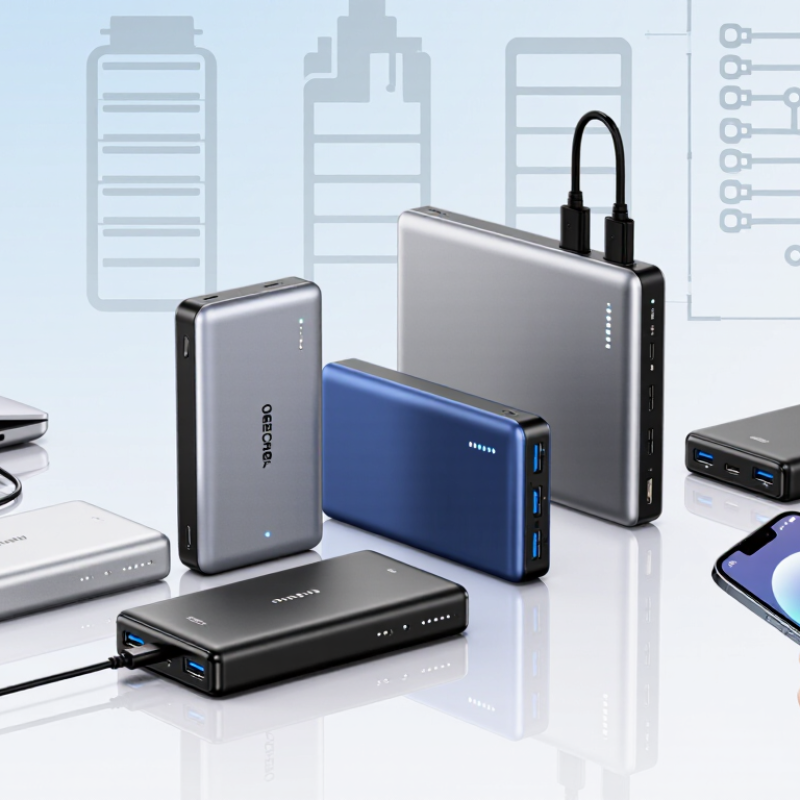
What Are the Top China Laptop Power Bank Suppliers?

Laptop Power Banks: Core Features and Technical Standards

A laptop power bank should be judged by usable energy, not a large mAh number alone. Capacity in watt-hours makes comparisons clearer because cell voltage can vary. A 20,000 mAh label does not tell the whole story. Check the label. Also compare rated capacity with the stated conversion efficiency; some energy is lost as voltage is regulated.

USB-C Power Delivery output matters for real laptop use. Check whether the bank supports the voltage and wattage your laptop requires, often listed in its manual or adapter specifications. A 65 W output may suit many compact laptops, while higher-demand models can need more. Reliable suppliers provide a clear datasheet, cell and protection details, and relevant safety test documentation.

Ask for test reports, not just a printed certification logo. Look for overcurrent, overvoltage, short-circuit, and temperature protections. Thermal performance deserves attention: during a sustained load, a warm case is expected, but excessive heat or unstable output is not. A sample test with your laptop and cable can reveal issues a specification sheet misses. Cables matter, too. A weak cable may limit charging even when the power bank’s rating looks sufficient. Supplier claims can be incomplete, so verify key figures independently.
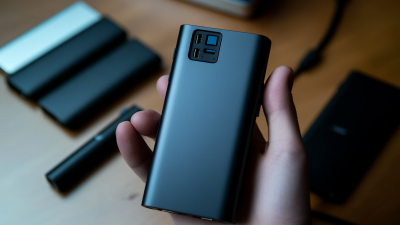
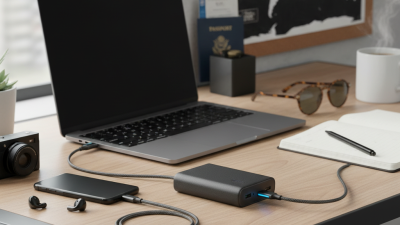
How China’s Laptop Power Bank Supply Market Is Organized

China’s laptop power bank supply market is organized as a layered manufacturing network, not a single factory category. Cell suppliers provide the energy core; electronics firms build battery-management and power-conversion boards; enclosure makers and assemblers complete the product. Some suppliers handle only one stage, while others coordinate several through contract manufacturing. The map is not perfectly neat. Capabilities vary, even among factories offering similar-looking products.

Demand is shaped by laptop ownership and charging standards. IDC’s Worldwide Quarterly Personal Computing Device Tracker estimated 262.7 million PC shipments worldwide in 2024, a modest 1% rise year over year. That figure signals a large user base, but it does not measure laptop power bank sales directly. For technical screening, USB-IF’s USB Power Delivery 3.1 specification is useful: it allows power levels up to 240 watts. Buyers still need to check the actual output profile, cable rating, thermal behavior, and compatibility with specific laptops. A high wattage printed on a case is not enough.

Trading companies and export agents often connect overseas buyers with factories, especially for smaller orders. Larger buyers may work directly with assemblers and request sample testing, production audits, and traceable cell documentation. Ask who makes the cells and who owns final quality control. Small details matter: a warm connector during sustained charging can reveal more than a polished product sheet. Supplier structures shift, so verify each claim against current samples and records.

What Are the Top China Laptop Power Bank Suppliers? — How China’s Laptop Power Bank Supply Market Is Organized

USB Power Delivery (USB PD) standards set the maximum output capability suppliers can design for.

USB PD 3.0 supports up to 100 W; USB PD 3.1 Extended Power Range (EPR) raises the specification ceiling to 240 W. These are protocol limits, not market-share figures or guarantees of a particular power bank’s output. Suppliers typically differentiate through cell sourcing, pack assembly, power electronics, and OEM/ODM services.

Criteria for Evaluating Leading Chinese Suppliers

Leading Chinese laptop power bank suppliers should be judged by evidence, not catalogue claims. Ask for capacity data that states the test voltage and usable output, since advertised cell capacity may differ from energy delivered to a laptop. Check whether samples support the required USB-C power profiles and maintain stable output during extended use. Request thermal test records, protection details, and batch-level inspection results. Paperwork helps. A sample under load tells more.

Manufacturing consistency matters as much as peak performance. Compare several units from one production batch, checking port fit, casing seams, labeling, and charging behavior. Ask how cells are traced and how faulty units are recorded and handled. Clear answers indicate a more controlled process; vague promises deserve follow-up. Communication speed is useful, but it cannot replace technical proof. Independent test reports can add confidence, especially when methods and dates are clear. No checklist is perfect: test conditions may not match daily use, and a polished sample may not reflect every shipment. Keep that uncertainty in view, and make evaluation criteria specific before comparing suppliers.

Profiles of Notable China Laptop Power Bank Suppliers

Profiles of Notable China Laptop Power Bank Suppliers

China’s laptop power-bank suppliers generally fall into three groups: integrated battery-pack makers, electronics design and manufacturing firms, and component-focused assemblers. Integrated suppliers can coordinate cells, battery-management systems, circuit boards, and housings under one roof. That can simplify customization, though it does not guarantee consistent quality.

Ask for sample units and test them with your actual laptop.

The International Energy Agency’s 2024 report, Batteries and Secure Energy Transitions, says China produces nearly 85% of global battery cells. This industry scale supports a broad supplier base, but a country-level figure cannot verify any single factory’s performance.

Details matter. Compare documented cell sourcing, capacity consistency, warranty terms, and factory quality controls. A polished catalog is not enough.

Electronics-focused suppliers may specialize in USB-C power delivery, compact circuit layouts, and multi-port designs. The USB Implementers Forum’s USB Power Delivery 3.1 specification allows power levels up to 240 watts, but that does not mean every bank or cable can deliver them safely.

Request independent test reports for output, temperature rise, and protection behavior. One weak point: supplier documents can be hard to compare, so verify key claims with a third-party lab before placing a large order.

How to Verify and Source a Suitable Supplier

Finding a suitable China laptop power bank supplier starts with checking the production setup, not a catalog page. Ask whether the company designs cells, assembles packs, or outsources either step; the answer changes your risk. Request a live video walk-through of incoming inspection, assembly, aging tests, and finished-goods storage. Look for dated records, calibrated instruments, and batch traceability. Ask for proof. A neat factory tour is useful, but it cannot replace a production audit. I would not treat a polished showroom as proof; that judgment can still miss hidden subcontracting.

Send a written specification before comparing quotations: rated capacity, output profiles, ports, protection features, enclosure material, and order volume. Request samples matching the configuration proposed for mass production. Check weight, dimensions, charging behavior, heat under load, and usable capacity with suitable test equipment. Have an independent lab verify key claims, and confirm report identifiers match the exact model and components. Ask for inspection criteria, defect limits, warranty terms, lead time, and remedies for failed batches. Destination-market safety and transport requirements differ, so confirm current requirements with qualified testing and logistics partners before paying a deposit. Keep revisions in writing. Small misses happen.