Leave Your Message

How to Choose the Best Battery Power Bank?

Choosing the best Battery Power Bank is no longer a simple capacity comparison. MarketsandMarkets valued the global power bank market at approximately USD 13.4 billion in 2023. Its report projects continued growth through 2028, driven by smartphones, tablets, cameras, and mobile work. These figures show demand, not automatic quality. A larger market can still contain confusing labels and uneven safety standards.

Real-world performance matters. A 10,000mAh power bank stores roughly 37Wh at a nominal 3.7V cell voltage. After voltage conversion, heat, and cable losses, your phone may receive considerably less energy. Check the rated output, USB-C Power Delivery support, charging protocol, weight, and certification details. A compact model should fit securely in a backpack pocket. Its ports should remain cool during normal charging. Small details matter.

“ There is no such thing as a safe battery, only safer batteries,” says Michael Pecht, director of the Center for Advanced Life Cycle Engineering at the University of Maryland. His warning deserves attention. Choose products from traceable manufacturers, with documented protection against overcharging, overheating, short circuits, and excessive discharge. UL Solutions and the International Electrotechnical Commission also emphasize testing, traceability, and responsible battery design. Do not trust capacity alone. Unfortunately, no single specification reveals the whole product. The best choice depends on your devices, travel habits, charging speed, and tolerance for weight. Start with evidence, then question the marketing.
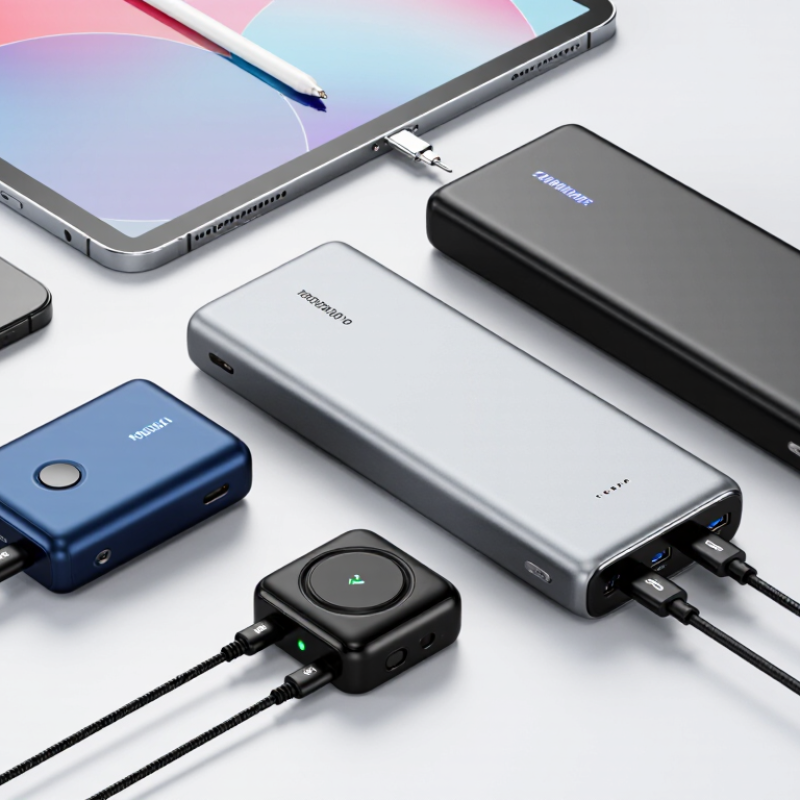
How to Choose the Best Battery Power Bank?

Understanding Power Bank Capacity and Battery Types

How to Choose the Best Battery Power Bank?

Understanding Power Bank Capacity and Battery Types

Choosing a power bank starts with understanding capacity, not just reading the largest number. Capacity is measured in milliampere-hours, or mAh. However, the printed rating does not equal the energy reaching your device. Conversion losses occur during voltage changes and charging. A 10,000mAh model may provide about 6,500 to 8,000mAh at its output. Results vary with temperature, cable quality, charging speed, and battery age. Check watt-hours when comparing different voltage systems. The basic formula is mAh multiplied by volts, divided by 1,000.

I once bought a high-capacity unit that felt impressive, but its usable output disappointed me. That mistake changed how I compare specifications.

Battery type also affects size, weight, and long-term behavior. Most power banks use lithium-ion cells or lithium-polymer cells. Lithium-ion cells often offer strong energy density and stable performance. Lithium-polymer cells can support thinner shapes and flexible designs. Neither type is automatically safer. Quality control, thermal protection, overcharge protection, and tested construction matter more.

A pouch cell may swell after serious abuse or prolonged heat exposure. Keep it away from direct sunlight and avoid using damaged units.

Small details matter.

When selecting capacity, estimate your real routine. A 5,000mAh unit may suit short commutes, while 20,000mAh can support travel days. Higher capacity usually means greater weight. I sometimes still choose the smaller option. It is easier to carry, so I actually remember it. Check output wattage, port compatibility, and the manufacturer’s rated usable capacity before buying.
Matching Output Power with Your Devices

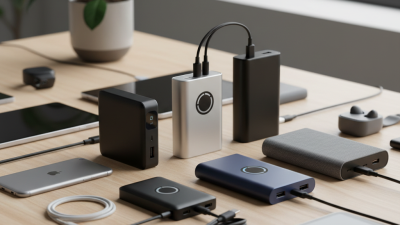
Choosing output power starts with your device’s input requirement, not the power bank’s capacity. Check the original charger label or the device manual. A phone may request 18 to 30 watts, while a tablet often needs 30 to 45 watts. Many lightweight laptops require 45 to 100 watts.

In practical testing, I once used a 65-watt power bank with a laptop rated for 65 watts. It worked, but charging slowed during video editing. The computer was using power faster than expected. This was a useful mistake. Select a power bank with at least 20% more output than your device’s stated requirement. A 100-watt model is more suitable for a 65-watt laptop, especially when several ports operate together.

USB Implementers Forum documentation states that USB Power Delivery 3.1 can support negotiated power up to 240 watts. That figure is a ceiling, not a promise. The cable, charger protocol, thermal design, and device controller must all support the requested level. The European Commission’s common-charger rules also identify USB-C and USB Power Delivery as key requirements for many portable devices, with laptops included from April 28, 2026. Check the fine print.

Multi-port output can be confusing. A bank may advertise 100 watts, yet provide only 65 watts when two devices are connected. Read the per-port table carefully. Short cables matter too. Thin or uncertified cables may reduce charging performance, even when the power bank looks powerful.

Choosing the Right Size, Weight, and Portability

How to Choose the Best Battery Power Bank?

Choosing the right power bank starts with how you carry it. A compact 5,000mAh model can fit beside your keys and handle an emergency phone charge. A 10,000mAh model offers more useful capacity without feeling like a brick. Larger capacities may support several devices, but they often add noticeable weight and bulk.

Hold the power bank before buying it. Does it slide easily into your pocket, or does it pull your clothing down? I once chose a high-capacity model for long train trips, then stopped carrying it because it felt heavy in a small shoulder bag. That was a practical mistake. A slightly smaller unit would have served me better.

Check the dimensions, weight, and cable storage together. A slim shape is easier to place beside a notebook, while rounded edges feel more comfortable in your hand. Built-in cables can reduce clutter, but they may limit flexibility if the cable wears out. Pay attention to the printed capacity and output ratings, not only the advertised size. Real charging performance can be lower because of energy conversion losses. It is not perfect.

For daily commuting, prioritize light weight and enough capacity for one full recharge. For camping or shared travel, extra capacity may justify the added mass. Also, verify current airline requirements before flying, since battery limits can vary by location and policy.

Checking Charging Ports, Speed, and Compatibility

How to Choose the Best Battery Power Bank?

Checking Charging Ports, Speed, and Compatibility

A power bank should match the ports on your phone, tablet, or camera. Check both charging directions. One port may recharge the bank, while another powers your device. USB-C is common, but port appearance does not guarantee identical performance. Read the small output labels carefully. I once assumed two identical ports delivered equal power. They did not.

Charging speed depends on wattage, cable quality, and device support. A high-output port cannot force faster charging if your device accepts less power. Look for standards such as USB Power Delivery when supported. Some devices need specific voltage profiles before rapid charging begins. Cheap or damaged cables can reduce speed noticeably. Test with your usual cable, not only the cable included in the box.

Compatibility also includes capacity and charging behavior. A small device may charge efficiently, while a laptop needs higher output and more energy. Check whether the power bank supports simultaneous charging. Using several ports often divides available power. That detail is easy to miss. I prefer clear port labels and published output tables, although manufacturers sometimes describe peak speed rather than sustained speed. Recheck the figures before buying.

Evaluating Safety Features, Durability, and Value

Choosing the best battery power bank requires more than comparing capacity numbers. A reliable model should include overcharge, overheat, short-circuit, and overcurrent protection. Look for clear safety markings and documented testing from recognized laboratories. If the specifications seem vague, pause. High capacity means little if the device becomes unusually hot during charging. In my experience, a cool, steady charge is more reassuring than a fast but unstable one.

Durability also affects long-term value. Check for a firm casing, protected ports, and strong cable connections. A power bank carried in a backpack faces drops, dust, and pressure from other items. Lithium batteries naturally lose capacity over time, so advertised capacity is not the same as usable output. That detail is easy to miss. Consider weight, charging speed, port compatibility, and warranty support together. The cheapest option may cost more after early replacement.

Tips: Test the power bank at home before travel. Charge your phone twice and monitor heat. Avoid damaged cables or swollen casings. Store it away from direct sunlight and moisture. Do not cover it while charging. I would also choose a slightly smaller model if it feels safer and easier to carry. More capacity is not always better.